
K-Shift Dispatch
The Torch, the Traffic, and the Turning Point
In the history of Sydney’s urban planning, few moments capture the unique challenges facing King Street quite like the 2000 Olympic Torch Relay. On a crisp September morning, just one day before the Opening Ceremony, the Olympic flame traveled through Newtown. Carried by athletes like Jane Flemming, it was a moment of global prestige that happened to fall on a very busy Thursday.
The 2000 Reality: No Plan B
Back then, the logic was simple because King Street was the only viable artery for the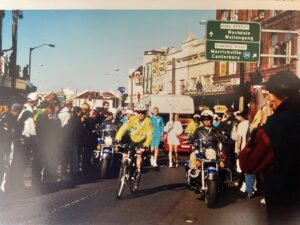 Inner West. If you stopped the buses for the flame, the entire corridor from the southwest to the CBD would have ground to a halt. There were no diversions and no high-capacity alternatives available at the time.
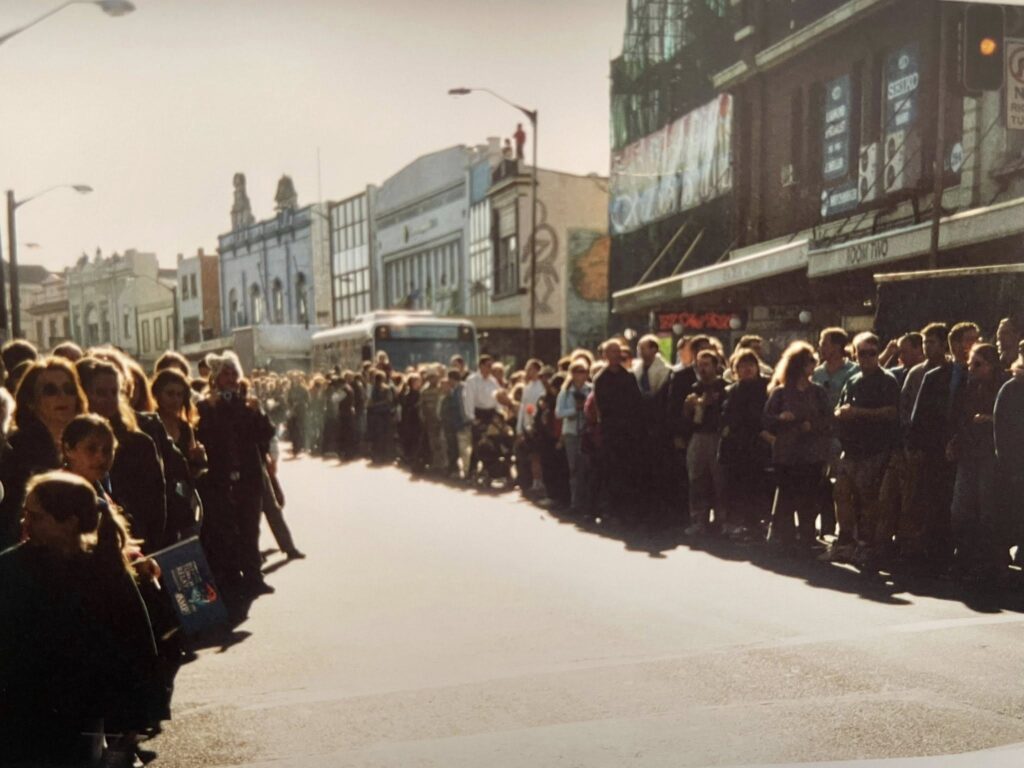
The result was a quintessentially Sydney scene. While the world’s media cameras focused on the golden torch, the locals were just trying to get on with their day. The flame moved through a diesel-fumed gauntlet and shared the narrow asphalt with idling 422 buses. These were filled with commuters and Sydney Uni students racing to make their 10AM classes.
The footpaths were overflowing with people who had claimed every available inch of space. Spectators hung out of the Victorian windows above the shops and stood on milk crates to get a better view. This massive crowd pressed right up to the edge of the road, leaving the torchbearer to navigate a thin path between a wall of cheering fans and the side of a bus. It was a masterclass in making do with an overstretched thoroughfare. Even a global spectacle had to check its shoulder for a bus wing mirror.
The Project K-Shift Vision
The fact that the Olympic flame had to share a lane with a bus in 2000 shows just how much we have historically demanded from this single stretch of road. For the first time in generations, we have the opportunity to address the congestion and space constraints that have defined Newtown for decades.
As the Sydney Metro Southwest moves toward its full opening, it will provide a high-capacity release valve underground. This infrastructure finally offers the structural freedom to improve the streetscape above without bringing the city to a halt. The torch is being passed to a new era where King Street finally has the room to move.